
🎣 𝗨𝗻𝗱𝗲𝗿𝘀𝘁𝗮𝗻𝗱𝗶𝗻𝗴 𝗙𝗹𝗼𝗮𝘁𝗶𝗲𝘀 𝗮𝗻𝗱 𝗠𝗲𝗮𝗹𝗶𝗲𝘀
South African anglers use two main hookbaits for most of their carp fishing — Floaties and Mealie kernels.
Each type has its own design, purpose, and behaviour in the water.
☁️ 𝗙𝗹𝗼𝗮𝘁𝗶𝗲𝘀
Floaties are lightweight, air-filled hookbaits designed to lift or partially lift the hook off the bottom. This makes them easy for fish to suck in while feeding.
There are three main types of Floaties:
1️⃣ Hard Floaties
Designed to float strongly and maintain buoyancy.
Offer the most lift but can soften or come off the hook quicker after time in the water.
Often used when you need high visibility or want the bait to sit just above the feed.

2️⃣ Soft Floaties
Softer texture that stays on the hook longer.
Provide gentle buoyancy, making them ideal for subtle or pressured fishing conditions.
Float only when used with small hooks (size 0.8 or size 1) such as the 𝗪𝗜𝗭𝗔𝗥𝗗 𝗤𝗨𝗜𝗖𝗞 𝗦𝗘𝗧 𝗛𝗢𝗢𝗞.


3️⃣ Bleeding Floaties
Release a visible cloud of colour and flavour into the water.


Highly effective in murky or stained water where visibility is low.
Like Soft Floaties, they will only float a small hook — size 0.8 or size 1 — and on larger hooks they act more as a balanced or sinking bait.
The purpose of Floaties is not always to make the bait float completely, but often to make it light and critically balanced, so it mimics natural food and can be easily sucked in by the fish.

“Floaties don’t always need to lift the bait — their main role is to make it light and balanced so it mimics natural food and is easily sucked in by fish”


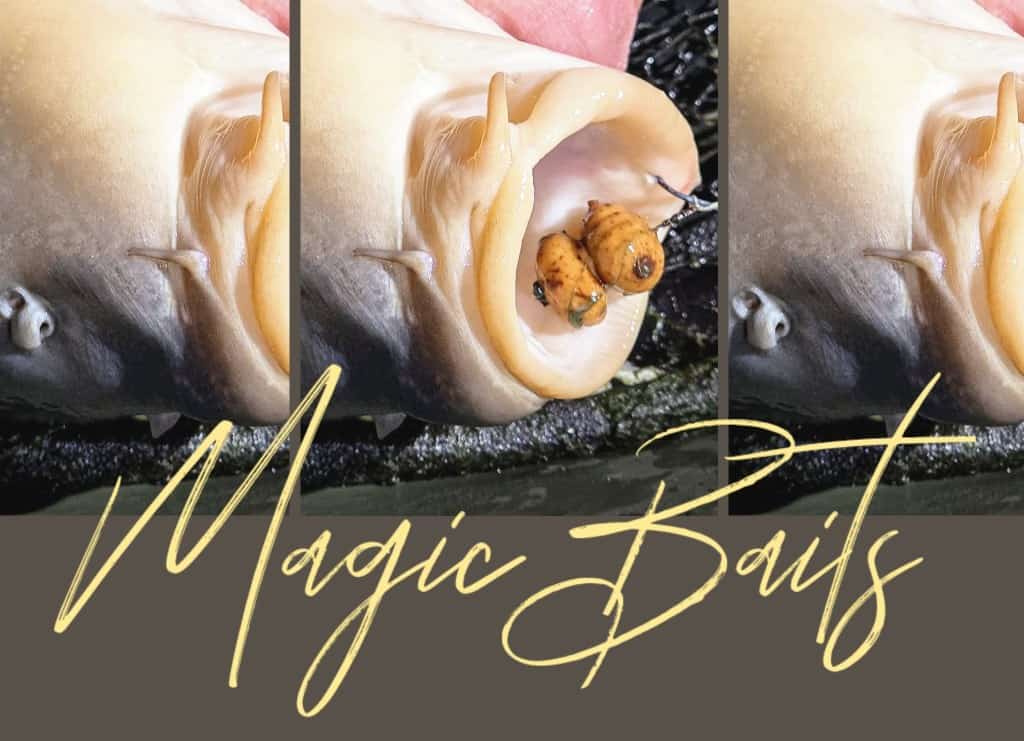
On the left hook, a Banana X Soft Floatie is paired with a Custard Chooby backing. This setup doesn’t float — it’s critically balanced, resting lightly on the bottom so that when a carp inhales, the bait slides effortlessly into its mouth.
On the right hook, two Vampire Small Bleeding Floaties with a Custard Chooby backing create a floating presentation, keeping the bait lifted and highly visible in the water column.
It’s important to note that both baits are presented on a No. 1 Wizard Quick-Set Hook — a very small, ultra-light hook that ensures perfect bait movement and natural suction response.


🌽 𝗠𝗲𝗮𝗹𝗶𝗲𝘀

Mealie kernels are dense, natural hookbaits made from maize. They sink to the bottom and are commonly used to target larger carp that feed deeper or more slowly.
Provide a firm, natural food source that carp recognise.

Commonly combined with floaties, doughs, or backings such as Chooby, Snow Eez, or bruinbroodjie to adjust buoyancy and presentation.

Mealie

Instant Dough

Chooby Backing

a Floatie
Ideal for use in deeper water or when targeting bigger, more selective fish.


⚖️ 𝗖𝗿𝗶𝘁𝗶𝗰𝗮𝗹 𝗕𝗮𝗹𝗮𝗻𝗰𝗲
When anglers combine Floaties with mealies or doughs, the goal is often to achieve critical balance — a setup where the bait is almost weightless in the water.
This allows fish to inhale it naturally while feeding, improving the chances of a clean hook-up.
💬 𝗜𝗻 𝗦𝗵𝗼𝗿𝘁
Hard Floaties: Strong lift, very Soft.
Soft Floaties: Gentle lift, stays on longer.
Bleeding Floaties: Gentle lift, stays on longer.
Colour and scent release, good visibility.
Mealie Kernels: Sinking bait, excellent for big fish, especially if combined with a Soft or Bleeding Floatie and/or a Chooby or Sweetdough backing.
Each plays a unique role in bait presentation — and understanding how they behave is the key to perfecting your rig setup.
Related Article


